


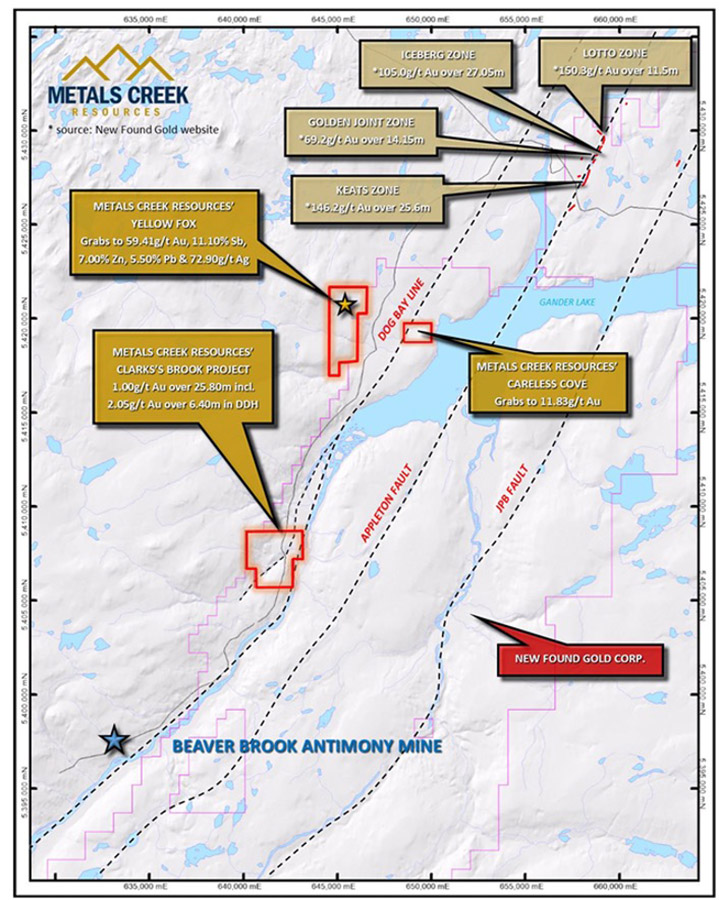
The Yellow Fox project is an early-stage exploration property with potential for antimony, gold, and silver. Located in Newfoundland, the property comprises 109 claim units in 5 licenses spanning 2,725 hectares.
Historical trench work has identified anomalies in gold (Au), antimony (Sb), silver (Ag), zinc (Zn) and lead (Pb), with concentrations reaching:
0
g/t
of gold (Au)
0
%
of antimony (Sb)
0
g/t
of silver (Ag)
0
%
of zinc (Zn)
0
%
of lead (Pb)
Geological context
The Yellow Fox project lies on the same geological trend as the former Beaver Brook antimony mine, located approximately 25 km to the southwest.
The property shares similar geological characteristics, including:
- fracture structures oriented north to northeast
- sulfide veins containing stibnite and arsenopyrite
- an intense carbonate alteration
* Please note that the results obtained on neighboring properties are not necessarily representative of the potential of the Yellow Fox project.
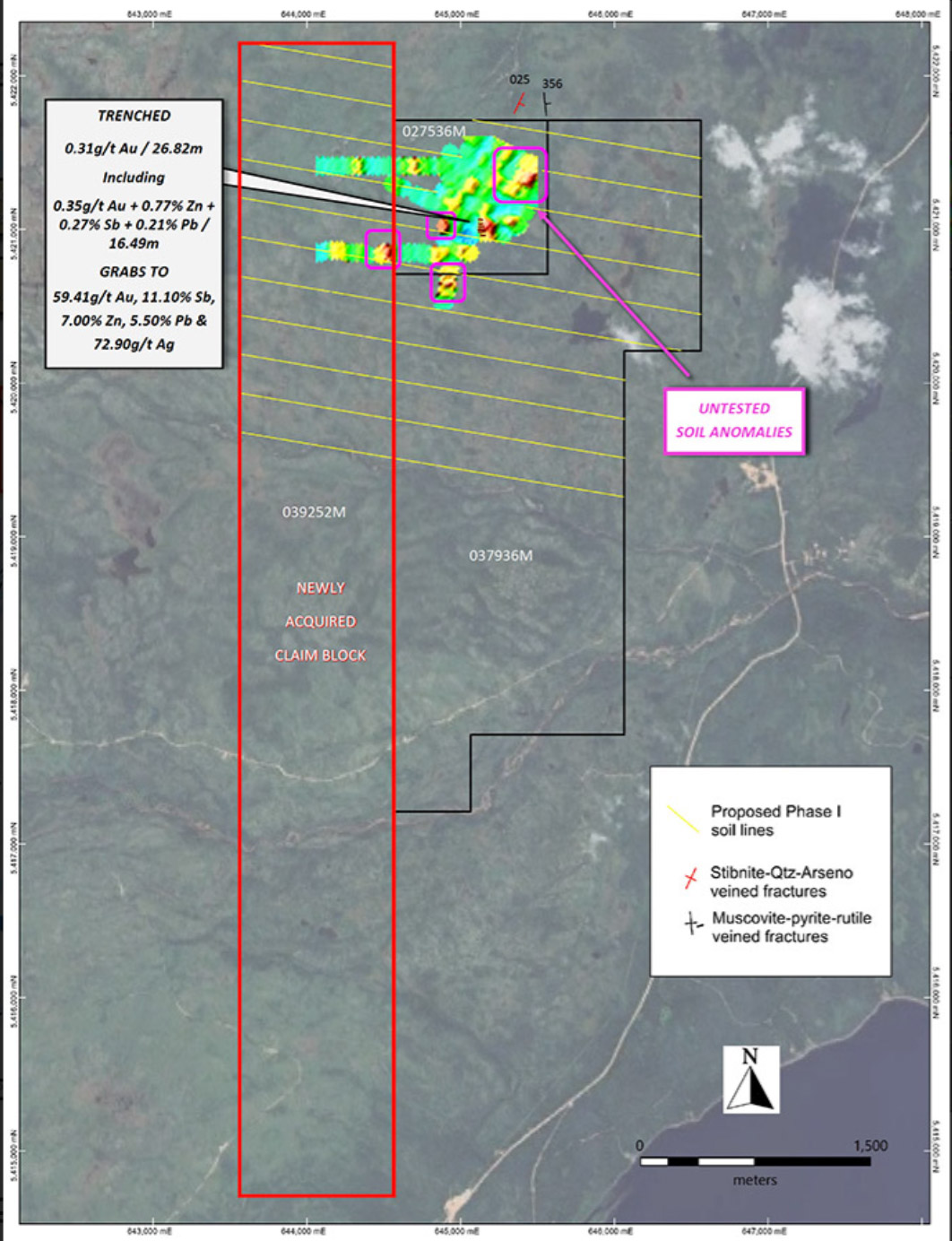
Field program
2026 Soil Resampling program confirms wide REE anomalies
Additional REE analysis on 32 samples from the Phase II soil sampling program at the Yellow Fox Property. Recent success from the 2025 Phase II soil sampling program resulted in the identification of new REE anomalies (Cerium (Ce) and Lanthanum (La)). These positive results led to re-running seven samples with a rare-earth ICP package, yielding highly anomalous Light Rare Earth Element (LREE) and Heavy Rare Earth Element (HREE) assays hosted within the Mount Peyton Intrusion. This new REE discovery prompted the submission of 32 additional samples for REE analysis, which will serve as the basis for this release.
Highlights:
- Highly elevated Dysprosium (Dy) and Terbium (Tb) results. Both Dy & Tb are used in High Performance Magnets and are essential for high-heat magnet applications.
- Highly anomalous HREE + Y samples demonstrate a potential HREE-enriched system.
- Pervasive Yttrium values in close spatial association with Dysprosium
- Strong HREE+Y/LREE Ratios indicate the higher value of REE projects as the HREEs are more sought after and entitle higher selling prices.
- Multiple samples exceeding HREE+Y/LREE ratios of 0.5, which is very rare
Rare Earth Elements
Following the initial promising results, seven (7) soil samples were selected for further rare earth element (REE) analyses using a specialized protocol.
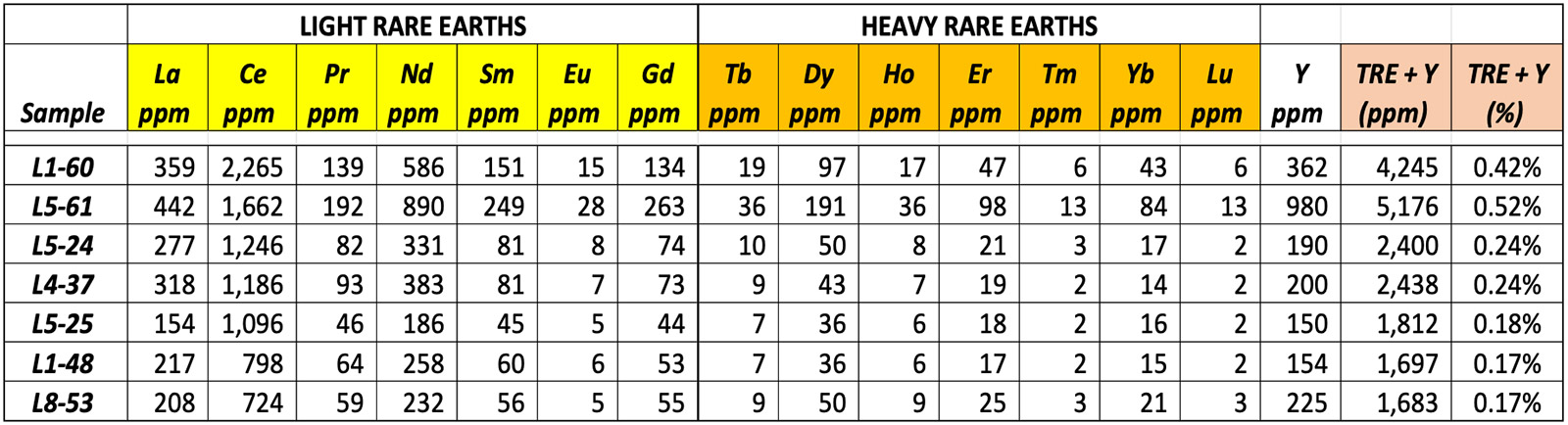
Table 1 -Initial 7 sample Re-Run Soil Samples with Rare Earth Assay Package
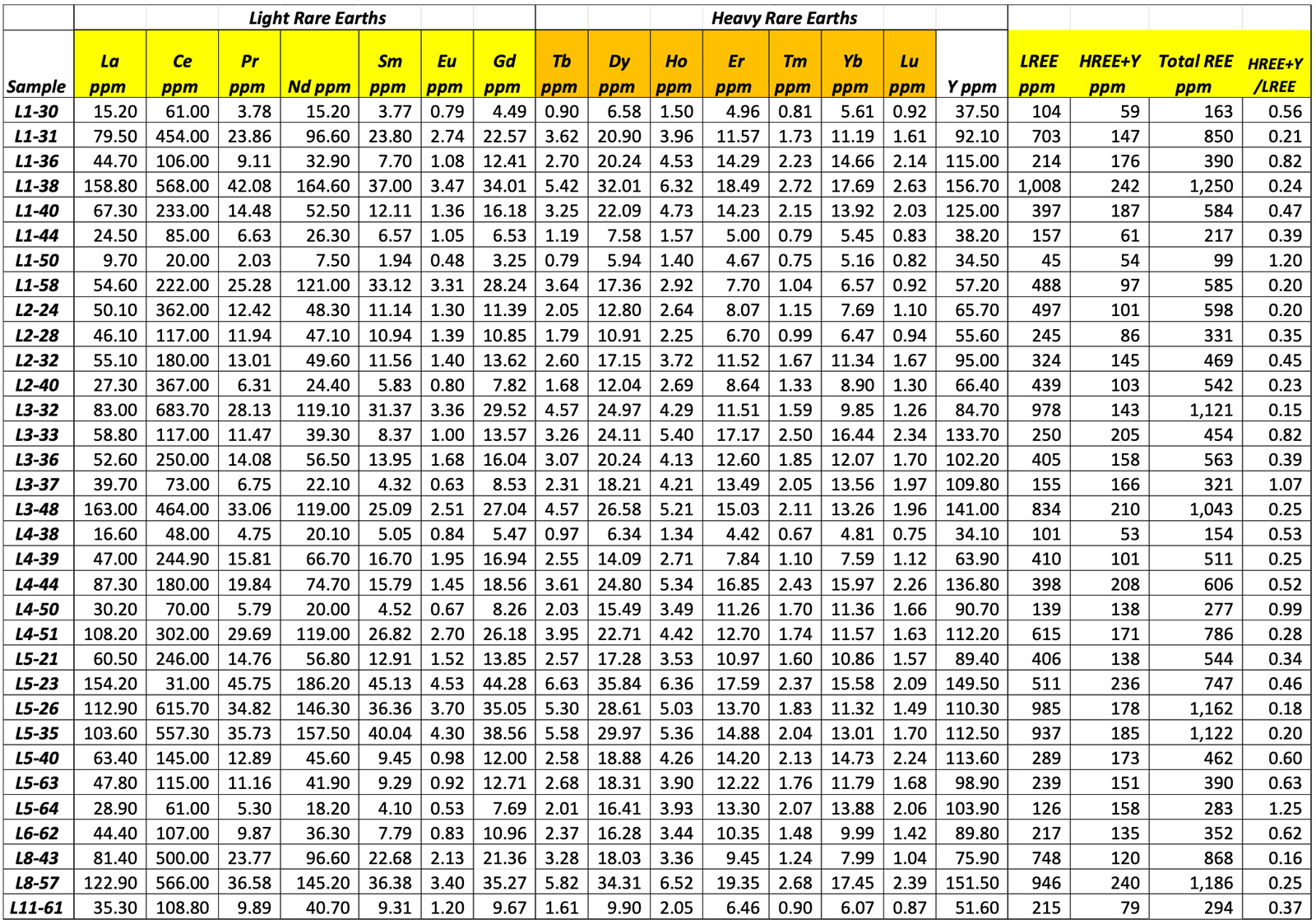
Table 2: Follow-up Re-Run Soil Samples with Rare Earth Package
The results revealed high and abnormal concentrations of rare earth elements, including:
- 1,683 to 5,176 ppm of total rare earth elements (TREE)
- Light rare earth element (LREE) enrichment: La, Ce, Pr, Nd
- The presence of heavy rare earth elements (HREE): Dy, Tb, Y
These results indicate the potential presence of a mixed rare earth mineralized system, associated with a fertile monzogranite.
Observed Elements
Neodymium (Nd) and
praseodymium (Pr)
Essential for the manufacture of magnets (electric vehicles, wind turbines)
praseodymium (Pr)
Essential for the manufacture of magnets (electric vehicles, wind turbines)
Dysprosium (Dy)
Allows magnets to operate at high temperatures
Allows magnets to operate at high temperatures
Thorium (Th)
A common indicator of the presence of rare earth elements
A common indicator of the presence of rare earth elements
Growing Potential
Global demand for rare earth elements is growing rapidly, particularly due to their use in:
Electric vehicle

Wind turbine

Aerospace and defense

Advanced Technology
Second type of target identified
In addition to the anomalies in critical metals (Sb, Pb, Zn, Ag, Au), the work has identified a second type of exploration target, characterized by:
- rare earth anomalies (La, Ce)
- areas that can reach up to 1,200 m in length
- distinct geochemical signatures, not yet tested in the field
These results confirm the strong potential of the Yellow Fox project for different types of mineralization.
Next Steps
The next phases of work could include:
- ground geophysical surveys
- stripping and exploration trenches
- channel sampling
- line preparation work
The necessary permits for these activities have already been obtained.
Localisation
The Yellow Fox property is located approximately 10 km southwest of the municipality of Glenwood, Newfoundland, south of the Trans-Canada Highway.
The project is accessible via several forest roads, offering relatively easy access to the site.
Qualified person
The technical information presented has been reviewed and approved by Gordana Slepcev, P.Eng., President and Chief Executive Officer of Lomiko Metals, acting as a Qualified Person within the meaning of Canadian National Instrument NI 43-101.
The information provided by Metals Creek was also reviewed by Wayne Reid, P.Geo., a registered qualified person in Newfoundland.
The samples were analyzed by Eastern Analytical Ltd. (Springdale, Newfoundland) according to the ICP-34 method using the ICP-OES analytical technique.