



Graphite extracted from the La Loutre project

Purification and conditioning for batteries
Manufacturing of the essential component of lithium-ion batteries
Tests confirming excellent energy performance
Graphite extracted from the La Loutre project
Purification and conditioning for batteries
Manufacturing of the essential component of lithium-ion batteries
Tests confirming excellent energy performance
TESTS
Metallurgical studies
The graphite from the La Loutre project, developed by Lomiko Metals, is being tested to see if it can be used in modern batteries, including those for electric vehicles and energy storage systems.
The results obtained so far are very encouraging. The material produced from La Loutre graphite has demonstrated high performance, comparable to—or even superior to—some commercial graphites already used in industry.
These tests confirm the project’s potential to contribute to a North American source of materials essential to the energy transition.
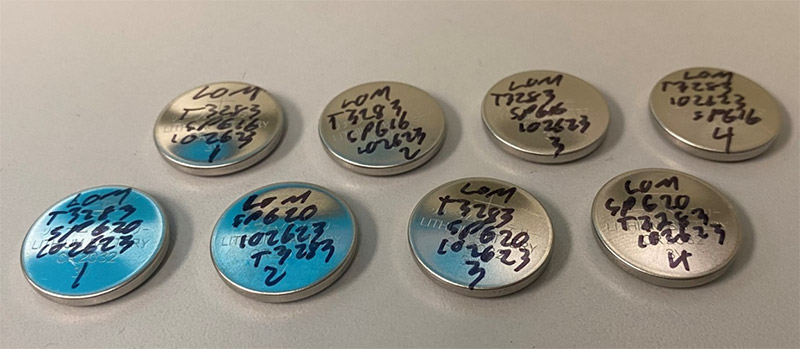
Polaris button cells
In this study, graphite samples were sent to a specialized laboratory for testing in small experimental batteries. These tests allow researchers to measure the material’s behavior under controlled conditions and validate its potential for use in real-world batteries.
This image shows small experimental batteries, called “button cells”, used in the laboratory to test graphite for the La Loutre project. These miniature batteries allow researchers to verify how the material behaves during charging and discharging. This is an essential first step in validating its use in larger batteries, such as those in electric vehicles.
Key facts
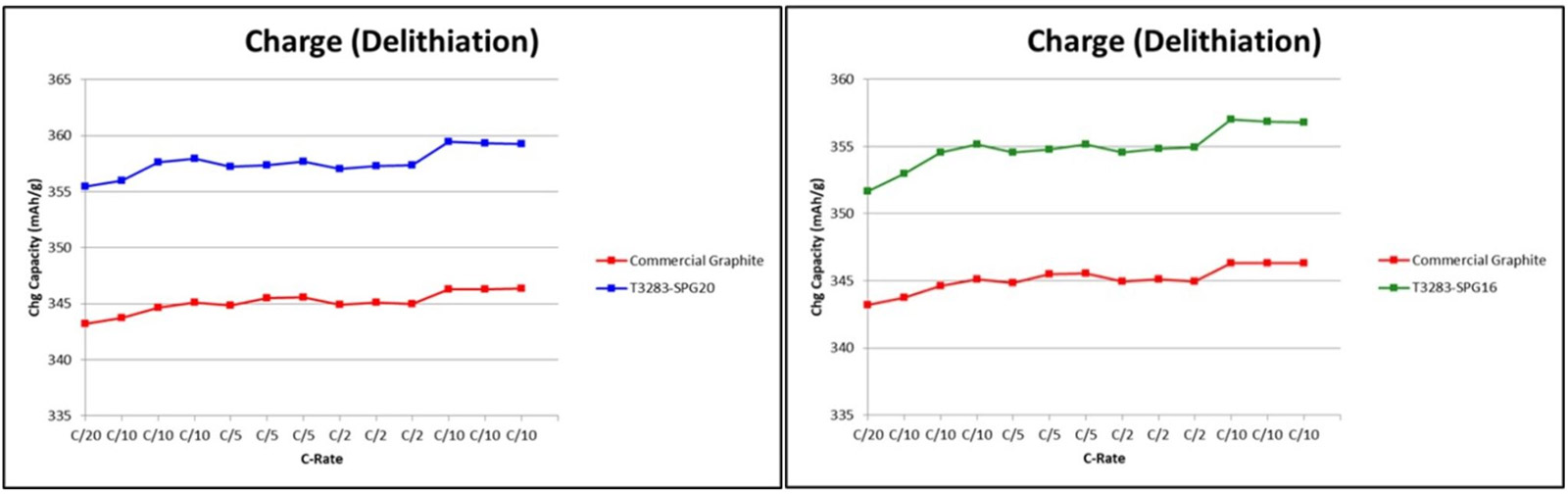
These graphs compare the performance of La Loutre graphite to that of a commercial graphite already used in industry.
- The vertical axis (load capacity) indicates the amount of energy the material can store
- The horizontal axis represents different charging and discharging speeds (cycles)
Key takeaways
La Loutre graphite is stable and efficient
It offers high energy capacity
It compares favorably to commercial graphites
It works well in different battery formats
Tests demonstrate that the material meets industry requirements.
Phase 2
This involves testing graphite in more complete batteries, similar to those used in industry. Initial results demonstrate consistent performance and good stability across charge and discharge cycles. This work further validates the use of La Loutre graphite in practical applications.
Polaris single-layer pocket cells
In this stage, the graphite from the La Loutre project was tested in more complete batteries, called “pocket cells”, which are more like those used in electronic devices and electric vehicles.
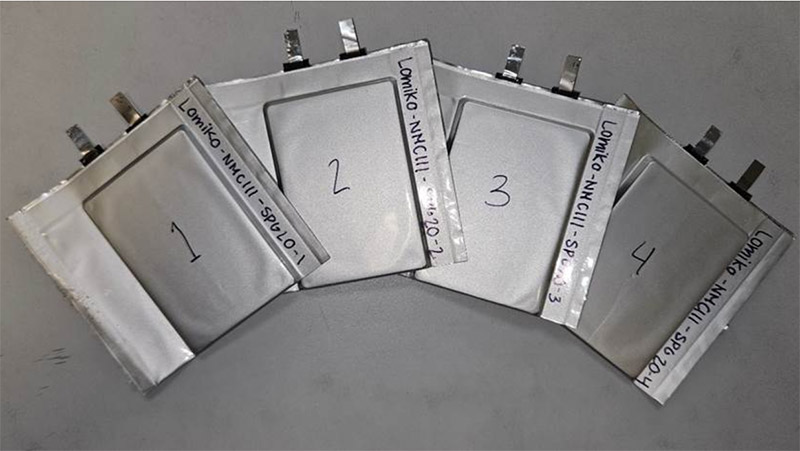
This image shows the pouch-type monolayer battery cells manufactured by Polaris for Lomiko. These prototypes use Lomiko’s purified natural graphite as the anode material, paired with a standard NCM111 cathode. These cells serve as a real-world testbed to validate the electrochemical performance of graphite under rigorous cycling conditions, confirming the viability of our material for the electric vehicle market.
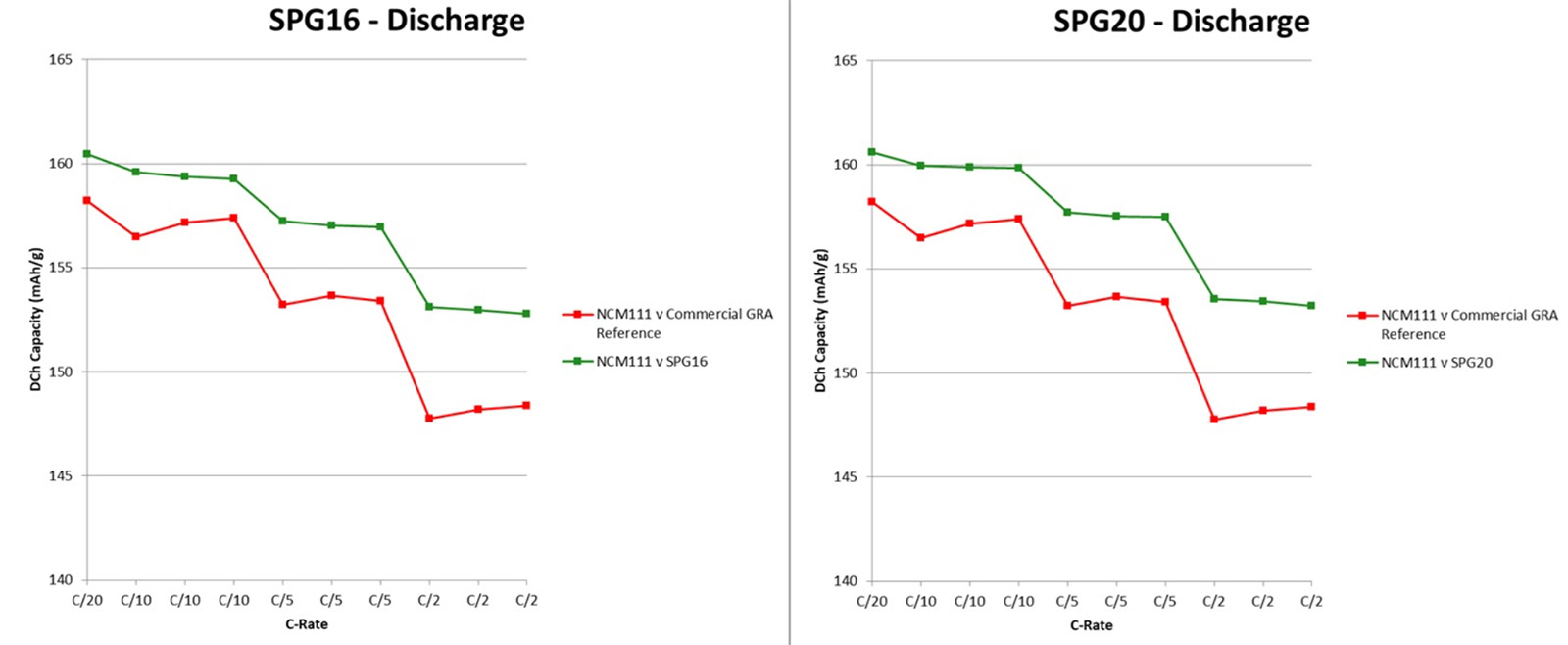
The results show that:
- The material offers stable and reliable performance
- Good charge and discharge capacity over time
La Loutre’s graphite compares favorably to commercial materials, confirming its potential for use in real batteries.